
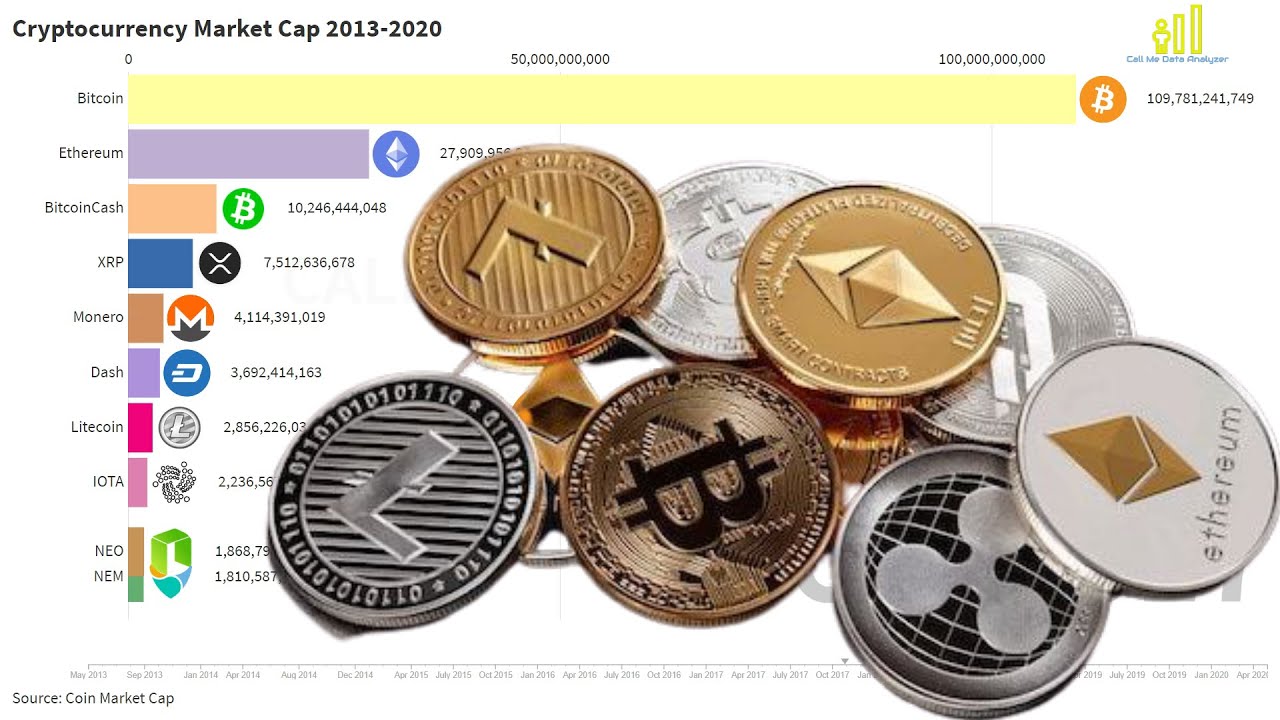
- What is the market cap of all cryptocurrencies
- Market cap of all cryptocurrencies
- Are all cryptocurrencies the same
Are all cryptocurrencies mined
Using powerful computers, crypto miners are solving complex math problems that are required to validate transactions on the blockchain, said Chris Kline, COO and co-founder of BitcoinIRA joaca blackjack vip multihand. Blockchain networks essentially serve as a “public ledger” for all transactions, promoting transparency.
As someone who has explored the world of cryptocurrency mining for a while, I can confidently say that mining remains one of the most popular ways to earn cryptocurrencies. When we talk about mineable cryptocurrencies, we are referring to coins or tokens that can be obtained through the process of mining, a method that involves using computer power to validate transactions and secure the blockchain network. If you’re considering mining cryptocurrencies, understanding the different types of mineable coins, the mining process itself, and the rewards involved is crucial. This guide will take you through the top mineable cryptocurrencies, compare their features, and give you a clear understanding of how mining works for each.
Crypto mining isn’t so much a process of extraction as it is one of creation, which requires solving a complex mathematical puzzle via advanced computer hardware and technical expertise. Miners receive cryptocurrency rewards for their efforts in a process called proof-of-work. This leads to the mining of a block, which is then appended to the end of the blockchain.
Presently, competition is fierce, and it’s only increasing in intensity as mining hardware is becoming advanced and equations are getting harder. The equations were tough enough to track in the first place and required a lot of (computer-assisted) guesswork. There is no other way to mine besides guessing solutions to the puzzle and checking if they are correct on a massive scale. Thus, the secret to becoming an excellent miner is being backed by enough computing power to guess the most answers faster than everyone else.

What is the market cap of all cryptocurrencies
A cryptocurrency wouldn’t be very useful if anyone could just change the history of transactions to their own liking – the point of cryptocurrency is that you can be sure that your coins belong to you only and that your balances will not change arbitrarily. This is why reaching consensus is of utmost importance. In Bitcoin, miners use their computer hardware to solve resource-intensive mathematical problems. The miner that reaches the correct solution first gets to add the next block to the Bitcoin blockchain, and receives a BTC reward in return.
CoinMarketCap does not offer financial or investment advice about which cryptocurrency, token or asset does or does not make a good investment, nor do we offer advice about the timing of purchases or sales. We are strictly a data company. Please remember that the prices, yields and values of financial assets change. This means that any capital you may invest is at risk. We recommend seeking the advice of a professional investment advisor for guidance related to your personal circumstances.
Let’s say that a company creates Stablecoin X (SCX), which is designed to trade as closely to $1 as possible at all times. The company will hold USD reserves equal to the number of SCX tokens in circulation, and will provide users the option to redeem 1 SCX token for $1. If the price of SCX is lower than $1, demand for SCX will increase because traders will buy it and redeem it for a profit. This will drive the price of SCX back towards $1.
Often, big changes in the crypto market cap are connected to significant events in the cryptocurrency and blockchain industry. Here are some of the most impactful events that resulted in major cryptocurrency market movements:
A coin is a cryptocurrency that is the native asset on its own blockchain. These cryptocurrencies are required to pay for transaction fees and basic operations on the blockchain. BTC (Bitcoin) and ETH (Ethereum) are examples of coins.
Market cap of all cryptocurrencies
You can find historical crypto market cap and crypto price data on CoinCodex, a comprehensive platform for crypto charts and prices. After you find the cryptocurrency you’re interested in on CoinCodex, such as Bitcoin, head over to the “Historical” tab and you will be able to access a full overview of the coin’s price history. For any given coin, you will be able to select a custom time period, data frequency, and currency. The feature is free to use and you can also export the data if you want to analyze it further.
A cryptocurrency exchange is a platform that facilitates markets for cryptocurrency trading. Some examples of cryptocurrency exchanges include Binance, Bitstamp and Kraken. These platforms are designed to provide the best possible prices for both buyers and sellers. Some exchanges only offer cryptocurrency markets, while others also allow users to exchange between cryptocurrencies and fiat currencies such as the US dollar or the euro. You can buy and sell Bitcoin on practically all cryptocurrency exchanges, but some exchanges list hundreds of different cryptocurrencies. One metric that is important for comparing cryptocurrency exchanges is trading volume. If trading volume is high, your trades will execute fast and at predictable prices.
The very first cryptocurrency was Bitcoin. Since it is open source, it is possible for other people to use the majority of the code, make a few changes and then launch their own separate currency. Many people have done exactly this. Some of these coins are very similar to Bitcoin, with just one or two amended features (such as Litecoin), while others are very different, with varying models of security, issuance and governance. However, they all share the same moniker — every coin issued after Bitcoin is considered to be an altcoin.
Welcome to CoinMarketCap.com! This site was founded in May 2013 by Brandon Chez to provide up-to-date cryptocurrency prices, charts and data about the emerging cryptocurrency markets. Since then, the world of blockchain and cryptocurrency has grown exponentially and we are very proud to have grown with it. We take our data very seriously and we do not change our data to fit any narrative: we stand for accurately, timely and unbiased information.
You can find historical crypto market cap and crypto price data on CoinCodex, a comprehensive platform for crypto charts and prices. After you find the cryptocurrency you’re interested in on CoinCodex, such as Bitcoin, head over to the “Historical” tab and you will be able to access a full overview of the coin’s price history. For any given coin, you will be able to select a custom time period, data frequency, and currency. The feature is free to use and you can also export the data if you want to analyze it further.
A cryptocurrency exchange is a platform that facilitates markets for cryptocurrency trading. Some examples of cryptocurrency exchanges include Binance, Bitstamp and Kraken. These platforms are designed to provide the best possible prices for both buyers and sellers. Some exchanges only offer cryptocurrency markets, while others also allow users to exchange between cryptocurrencies and fiat currencies such as the US dollar or the euro. You can buy and sell Bitcoin on practically all cryptocurrency exchanges, but some exchanges list hundreds of different cryptocurrencies. One metric that is important for comparing cryptocurrency exchanges is trading volume. If trading volume is high, your trades will execute fast and at predictable prices.
Are all cryptocurrencies the same
Maybe it will be weird for you to hear that some of the most popular crypto money are limited, and there can’t be more than that. For example, there are 21 million Bitcoins circulating over the market, and that’s the upper limit, and the developers won’t ever let one more coin to be available. The same goes for the Bitcoin cash too. On the other hand, Ethereum and Litecoin don’t have a limit, and the supply is getting bigger every day, making them more available for the people. But, at the same time, it means they can’t really reach very high rates. This is another one important difference between these currencies – if the supply is determined, they are getting more worthy every day. But, if there are uncountable coins, their worth will never be stable.
We are “testing the waters” under Regulation A under the Securities Act of 1933. The information contained on the Masterworks.io website has been prepared by Masterworks without reference to any particular user’s investment requirements or financial situation. Potential investors are encouraged to consult with professional tax, legal, and financial advisors before making any investment into a Masterworks offering. All investments involve risk, including the risk of the loss of all of your invested capital. Please consider carefully the investment objectives, risks, transaction costs, and other expenses related to an investment prior to deciding to invest. Diversification and asset allocation do not ensure profit or guarantee against loss. Investment decisions should be based on an individual’s own goals, time horizon, and tolerance for risk.
With thousands of cryptocurrencies available today, understanding the different types can help you make smarter choices, whether you are investing, trading, or simply exploring the technology. Each category, from payment coins and utility tokens to stablecoins and governance assets, plays a distinct role in the broader crypto ecosystem.
The crypto market is huge, and it follows different rules, but it doesn’t mean it’s the same for all the cryptocurrencies available on it. When we talk about it, the first thing that crosses our minds is Bitcoin and its huge role in the world. It was the first virtual currency launched more than a decade ago, so it’s understandable that people recognize it the most, and it’s possible that most of them can’t name more than two currencies. But, there is a lot more than that – according to many sources, the total number of digital money is 6,955, but some of them failed and aren’t active right now. Another source says that the complete number is around 5,000 and that’s really a lot, knowing that we only recognize barely 10 of them.
If you’re new to the world of cryptocurrencies, you might see a jumble of names like Bitcoin, Ethereum, Dogecoin, and wonder if they’re all variations of the same thing. The short answer is a resounding NO! Let’s dive into why the crypto landscape offers a vast and varied array of options.